
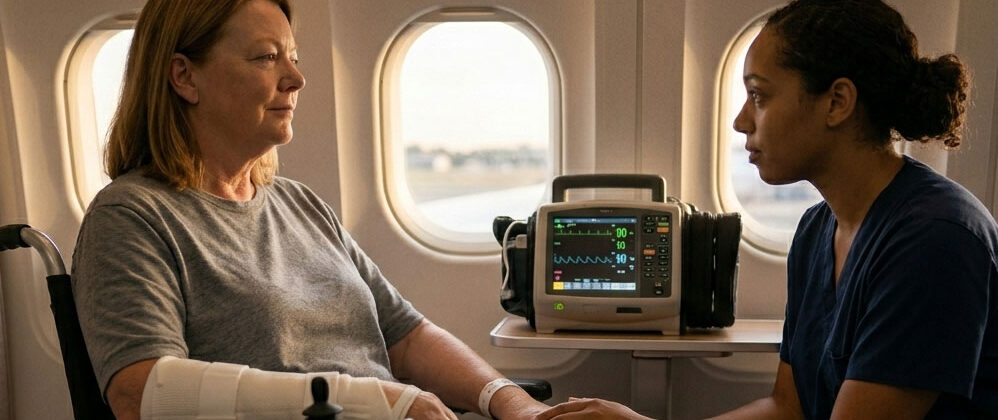
Flying After Surgery requires careful planning, medical advice, and a clear understanding of potential risks. While air travel is generally safe for healthy passengers, Flying After Surgery can introduce complications that may affect your recovery, especially when surgical wounds are still healing.
For many travelers, the decision about Flying After Surgery becomes even more complex when surgery occurs abroad. In these cases, returning home safely may involve coordination with doctors, airlines, and sometimes medical transport specialists.
Understanding when Flying After Surgery is safe on commercial flights, when a regular flight is acceptable, and when specialized transport such as an air ambulance may be required is essential. Proper planning helps surgical patients avoid unnecessary health risks while ensuring a safe journey.
Travelers recovering from recent surgery should be especially cautious, as the early healing period often carries a higher risk of complications during long flights.
Get Advice Before Flying After Surgery
When considering Flying After Surgery, the conditions inside an airplane cabin must be taken into account. Air pressure and oxygen levels differ from those at ground level, which can affect surgical recovery.
Changes in cabin pressure during air travel may influence swelling near surgical incisions or increase discomfort following certain surgical procedures.
For example, travelers who recently underwent chest surgery, abdominal surgery, or neurosurgery may experience increased pressure-related discomfort during the flight. Some surgical patients may also notice fatigue or mild dizziness due to reduced oxygen levels.
Many of these concerns arise after common surgeries, which may appear routine but still require proper healing time before air travel is recommended.
Travelers should always consult their doctor before planning Flying After Surgery, especially when international travel is involved. Medical clearance helps determine whether a plane journey is safe based on the patient’s current recovery stage.
A major medical concern when Flying After Surgery involves the development of blood clots.
Extended sitting during long flights can slow blood circulation and increase the blood clot risk. This can lead to deep vein thrombosis, a condition where clots form in deep veins of the legs.
During commercial flights, passengers often remain seated for hours, which can increase the risk of venous thrombosis. This risk is particularly high for surgical patients who recently underwent major surgery or orthopedic surgeries.
The risk can also increase after procedures such as:
One warning sign of potential clot formation is unexplained leg pain, swelling, or tenderness in the lower limbs. These symptoms should never be ignored, especially when they appear during Flying After Surgery.
If a clot travels from the leg to the lungs, it may cause a pulmonary embolism, a life-threatening medical emergency requiring immediate treatment.
Because long flights can worsen circulation problems, preventing blood clots is one of the most important safety considerations when Flying After Surgery.
Speak with a Medical Transport Specialist
Another concern when Flying After Surgery is the possibility of medical complications during the flight.
Changes in cabin pressure may cause swelling around surgical incisions or discomfort at the surgical site. For certain surgical procedures, especially eye surgeries, pressure changes may temporarily affect healing.
Procedures such as laser surgery, retinal repair, or tonsillectomy may require a waiting period before air travel is considered safe.
Some surgical patients may also experience pain or nausea when traveling on an airplane shortly after surgery. If the type of surgery involved internal healing, excessive movement or pressure changes could slow recovery.
Patients who recently had procedures such as a colonoscopy, orthopedic surgeries, or abdominal operations should discuss potential complications with their doctor before planning travel.
Understanding these risks allows travelers to take the necessary precautions to reduce the risk of complications during their journey.
The appropriate timing for Flying After Surgery depends largely on the type of surgery performed.
Minor procedures may allow travel within a few days, while major surgery often requires several weeks of recovery before boarding a plane.
Common recovery timelines vary depending on the procedure:
Proper operative care during recovery is essential. Patients should follow their surgeon’s recommendations closely before considering Flying After Surgery.
Each patient heals differently, so medical guidance from a qualified doctor is essential before scheduling flights.
Preparation plays a crucial role in making Flying After Surgery safer.
Travelers should pack medications and medical documentation in their hand luggage so they remain accessible during the flight.
Important necessary precautions include:
These steps help reduce the risk of blood clots and improve comfort during air travel.
Passengers recovering from surgery should also allow additional time when arriving at the airport, as mobility may be limited during recovery.
Many airline companies require medical clearance for passengers Flying After Surgery.
Airlines must ensure that passengers are medically fit to travel on commercial flights. In some situations, travelers may need documentation confirming they are stable enough to fly on a regular flight (otherwise a medical flight will be necessary).
Airlines may also require confirmation that the passenger does not require immediate medical supervision during the journey.
These general guidelines help airlines maintain safety while supporting travelers who need to fly after medical treatment.
Sometimes Flying After Surgery on a standard plane may not be safe.
If complications occur or medical monitoring is required, specialized transport may be necessary.
Medical repatriation services can arrange transport using:
These services allow surgical patients to travel safely while continuing their recovery under medical supervision.
Check If Medical Transport Is Required
For individuals planning Flying After Surgery, having adequate travel insurance is extremely important.
A comprehensive policy can cover medical emergencies, unexpected complications, and even medical repatriation if necessary.
If complications occur during international travel, travel insurance may help cover the cost of specialized transport such as an air ambulance or medical escort services.
Travelers recovering from surgery should carefully review their policy to confirm coverage for medical events related to recent surgical procedures.
Commercial stretcher flights have become an essential solution for international patient transport, particularly for stable patients who cannot travel seated but do not require a full air ambulance.
By combining structured logistics, airline stretcher accommodations, and continuous medical supervision, these flights offer a safe and efficient alternative for long-distance medical travel. For families and insurers, they represent a balanced option—ensuring both patient safety and cost control.
Specialised providers such as Air Stretcher focus on coordinating commercial stretcher flights across international routes, working closely with airlines, hospitals, and medical teams. Our expertise allows patients to travel safely while benefiting from a fully organised medical transport process, adapted to each situation.
From medical evaluation to in-flight care and final transfer, this type of coordination ensures continuity of care at every stage of the journey.
Request a Safe Post-Surgery Travel Plan
